Specialised in varicose veins
More than 55,000 treated patients
16 UK clinics · 60 clinics across 5 countries


Medically reviewed by:
Last updated on:
August 18, 2026

If your legs are swollen, it's natural to wonder what's the cause of this.
Many people assume swelling occurs due to having varicose veins. Others worry they may have lymphoedema after reading about it online.
The truth is that both conditions can cause swollen legs, but they're not the same thing. They have different causes, different treatments and, in many cases, different long-term outlooks.
They can also occur together.
Understanding the difference is important because treating the wrong condition may do little to improve your symptoms.
Leg swelling is one of the most common reasons patients seek advice from a vascular specialist.
Sometimes the cause is obvious.
Sometimes it isn't.
Swelling can be caused by varicose veins, chronic venous insufficiency, lymphoedema, heart disease, kidney disease, certain medications or simply spending long periods standing or sitting.
That's why we don't assume every swollen leg has the same explanation.
Varicose veins are one of the most common causes of chronic leg swelling.
Healthy veins carry blood back towards the heart with the help of tiny one-way valves.
When those valves stop working properly, blood does not flow efficiently back towards the heart. This is known as venous reflux.
Over time, this leads to congestion in the veins, and fluid collects in the surrounding tissues, causing swelling, particularly around the ankles and lower legs.
Many people notice that the swelling:
Left untreated, chronic venous insufficiency can also lead to skin changes, inflammation and venous leg ulcers.
Lymphoedema is a different condition.
This does not primarily affect the veins, rather being due to abnormalities in the lymphatic system. The lymphatic system consists of tiny tubules called lymphatics, which remove excess fluid from the body's tissues.
If the lymphatic system isn't working properly, fluid builds up in the tissues, causing persistent swelling.
Unlike swelling caused by venous disease, lymphoedema often doesn't usually significantly improve simply by putting your feet up overnight.
The swelling may gradually become firmer over time and the skin can begin to feel thicker.
Yes, although it's less common than many people realise.
When chronic venous insufficiency has been present for many years, the constant build-up of fluid places extra strain on the lymphatic system.
Eventually, the lymphatic vessels may no longer be able to keep up with the amount of fluid that needs to be drained.
This is sometimes referred to as phlebolymphoedema, where both the veins and the lymphatic system contribute to the swelling.
There isn't always a clear answer without an assessment.
However, there are some clues.
Swelling caused by venous disease often:
Lymphoedema is more likely to:
Some patients have features of both conditions.
That's why diagnosis shouldn't rely on symptoms alone.
The first step is always understanding your symptoms.
We'll ask when the swelling began, whether it affects one or both legs, whether it changes during the day and whether you've experienced previous blood clots, surgery or cancer treatment.
We'll also examine your legs for signs of venous disease, skin changes and lymphoedema.
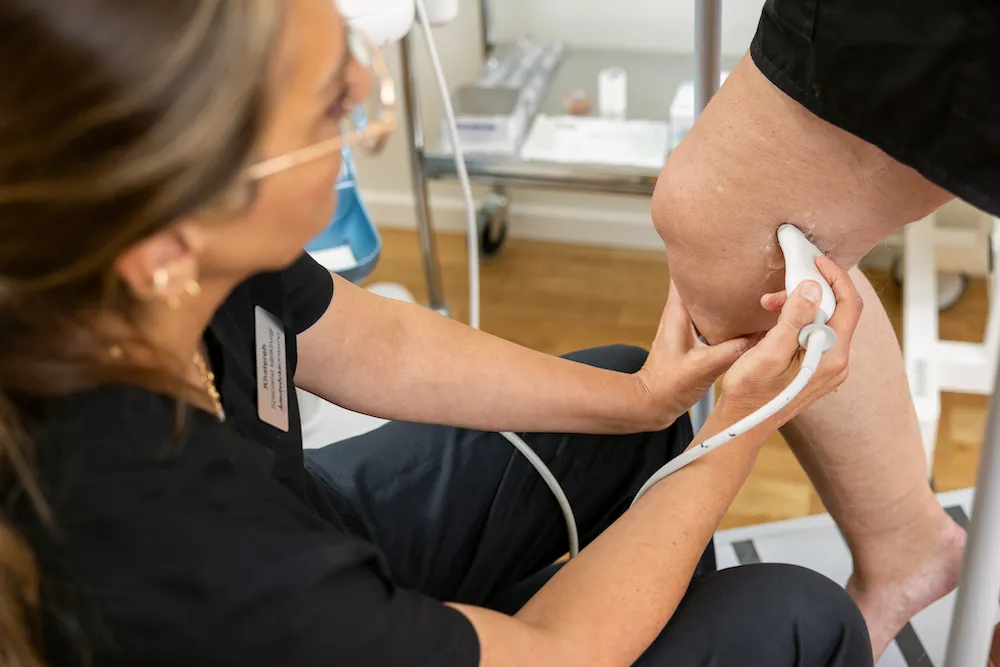
If we suspect an underlying vein problem, we'll perform a duplex ultrasound scan.
This allows us to see how blood is flowing through the veins and identify venous reflux.
If the swelling appears more consistent with lymphoedema or another medical condition, we may recommend further assessment or refer you to the appropriate specialist.
In many cases, yes.
If venous reflux is responsible for the swelling, treating the underlying vein problem often improves symptoms significantly.
Many patients notice that their legs feel lighter, less swollen and more comfortable after treatment.
However, if lymphoedema is also present, treating the veins may only address part of the problem.
That's another reason why making the correct diagnosis is so important before deciding on treatment.
Not every swollen leg is a cause for concern.
However, persistent swelling should never simply be dismissed as part of getting older.
It's worth seeking medical advice if the swelling:
Early assessment can often identify the cause before more serious complications develop.
Varicose veins can cause swollen legs, and in some people longstanding venous disease can eventually affect the lymphatic system as well.
The difficulty is that swollen legs don't always have a single cause.
What appears to be lymphoedema may actually be venous disease. Equally, someone with varicose veins may have swelling that's caused by something else entirely.
The only reliable way to understand why your legs are swollen is through a proper assessment.
By identifying the underlying cause, your vascular specialist can recommend the treatment that's most likely to improve your symptoms rather than simply managing them.
This article is based on research and publications from reputable sources to provide you with the most reliable information. Here are some of the main sources used:
Society for Vascular Surgery – Varicose Veins Treatment
https://vascular.org/patient-resources/vascular-conditions/varicose-veinsBy using these sources, you can be sure that the article is based on current and scientifically reviewed information.

Become varicose vein free: We offer full treatment at a fixed and transparent price regardless of the treatment method. With us, there are no hidden fees.
Learn more about our prices


Take our quick self-test to find out if you qualify for varicose vein treatment.