
Specialised in varicose veins
More than 55,000 treated patients
16 UK clinics · 60 clinics across 5 countries


Medically reviewed by:
Last updated on:
August 14, 2026
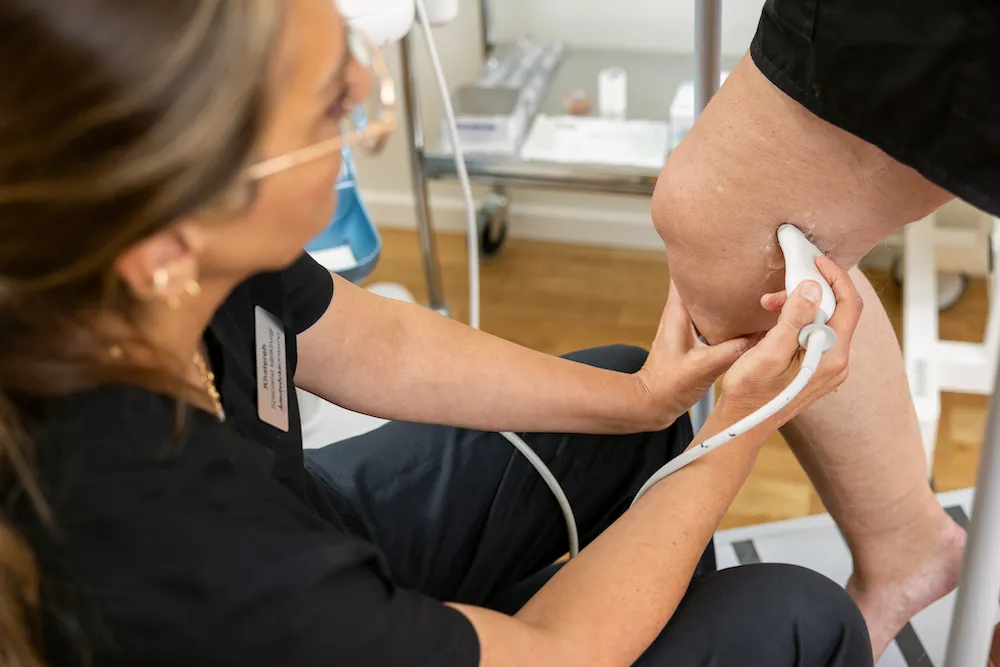
If you've noticed visible veins on your legs, these may either be thread veins or varicose veins, or a combination of the two.
Thread veins are very small veins that are visible within the surface of the skin. They can also be known as spider veins.
They're usually red, blue or purple and often spread out in fine lines or web-like patterns.
Most commonly, they appear on the thighs, calves and around the ankles.
Many people dislike how thread veins look, but they don't often cause physical symptoms.
In many cases, they're a cosmetic concern rather than a medical problem.
Varicose veins are larger veins that have become enlarged because the valves inside them are no longer working properly. These valves normally help blood flow in the correct direction towards the heart.
When the valves become weak or damaged, blood can flow backwards, or reflux, down the veins. Over time, the veins stretch, enlarge and become visible beneath the skin.
This is known as venous reflux and it's the underlying cause of most varicose veins.
Varicose veins are also more likely to be associated with symptoms such as aching, heaviness and swelling.
They can be.
Thread veins can occur in the absence of varicose veins, or they can be fed by deeper varicose veins.
"In understanding thread veins, it is useful to think of the structure of a tree. If you imagine the varicose veins are the branches of the tree, then the thread veins are the leaves. In these cases, treating the thread veins alone is unlikely to lead to a lasting result. However, thread veins are often present without any larger veins feeding them, with only the thread veins themselves being a problem. These can be treated without any deeper treatment. This is why it is important to determine what's happening underneath the skin before deciding on treatment."
Gary Maytham, Consultant Vascular Surgeon
Patients are often surprised that the consultation doesn't begin with us studying their veins.
Instead, we begin by asking questions.
When did you first notice them?
Do your legs ache at the end of the day?
Do they feel heavy after standing?
Have your symptoms changed over time?
Has anyone else in your family had varicose veins?
These answers often provide more useful information than appearance alone.
Someone with only a few visible veins may have significant underlying venous disease, while another person with much larger veins may not require treatment at all.
Every patient is different, but there are several things we look for when assessing visible veins.
Thread veins are tiny surface blood vessels.
Varicose veins are much larger and usually involve the superficial veins deeper beneath the skin.
Thread veins are generally flat and don't bulge above the skin.
Varicose veins often appear raised, twisted or rope-like.
Thread veins usually cause no symptoms at all.
Varicose veins are more likely to be associated with:
Symptoms don't always match the appearance, which is why we never rely on appearance alone.
This is often the biggest difference.
Thread veins can occur without any significant problem in the underlying veins.
Varicose veins are commonly caused by venous reflux, where blood flows in the wrong direction because the valves inside the vein aren't working properly.
The only reliable way to confirm this is with an ultrasound scan.
Thread veins and varicose veins often require different treatments.
Thread veins may be treated with microsclerotherapy or surface laser treatment.
If varicose veins are caused by venous reflux, treating the underlying faulty vein first usually provides the best long-term outcome. Depending on your individual circumstances, this may include Endovenous Laser Ablation (EVLA), ultrasound-guided foam sclerotherapy or ambulatory phlebectomy.
One of the biggest misconceptions is that we can diagnose vein disease simply by looking at your legs.
We can't.
A duplex ultrasound scan shows us how blood is flowing through your veins.
It allows us to identify faulty valves, venous reflux and the source of the visible veins.
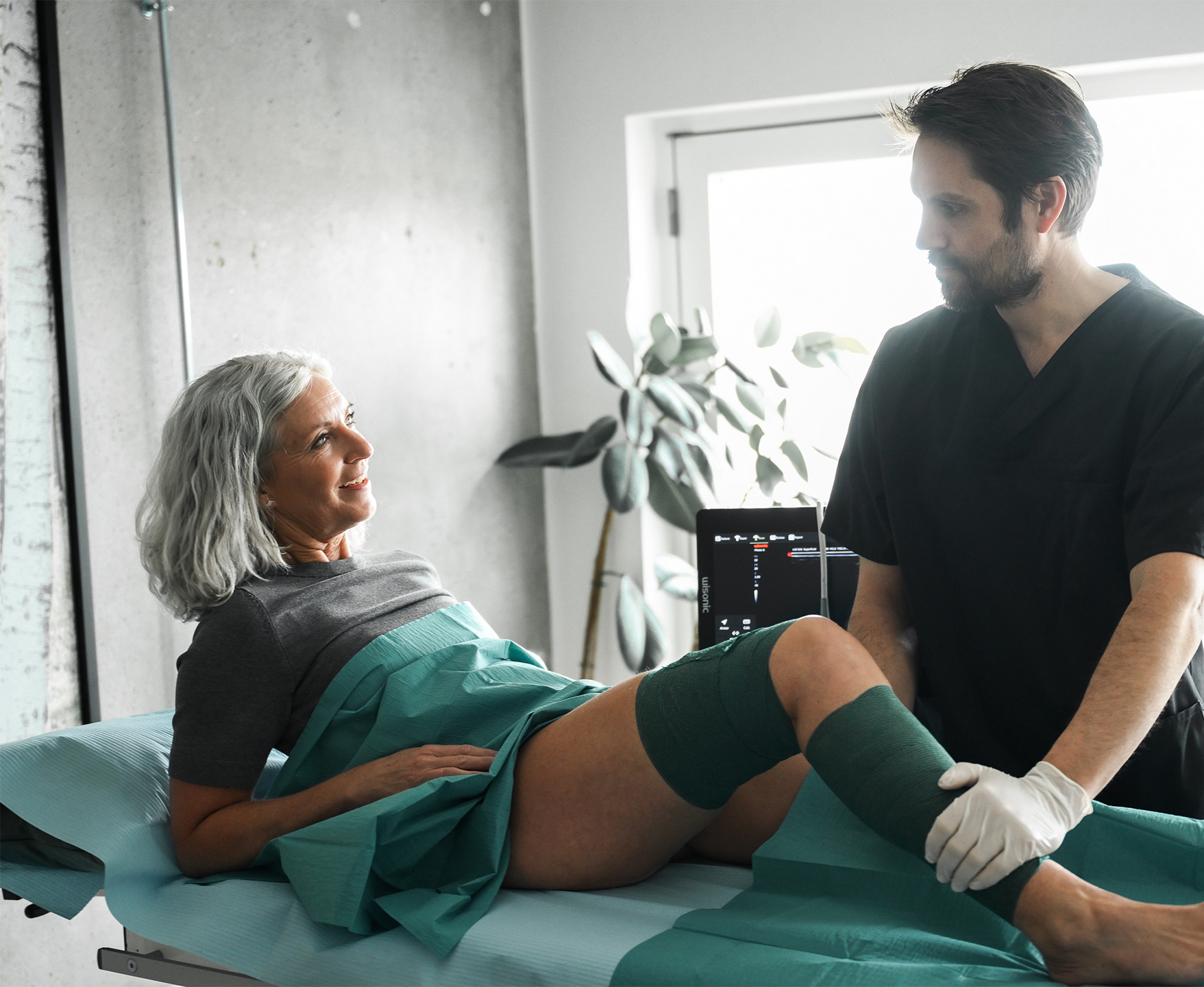
"A pivotal part of a varicose vein consultation is the duplex ultrasound scan. When performing this, I demonstrate the findings to my clients, helping them understand the root cause of their visible veins, explaining that by treating this as well as any surface veins, we achieve good long-term results."
Gary Maytham, Consultant Vascular Surgeon
Visible veins don't always need treatment.
However, it's worth arranging an assessment if you also experience:
These symptoms may suggest an underlying vein problem that should be investigated.
Thread veins and varicose veins may look similar, but they aren't the same condition.
The visible veins on your legs are only part of the story. What matters most is understanding why they've developed and whether there's an underlying vein problem that needs treating.
If you're unsure which type of vein condition you have, a consultation with a vascular specialist can provide a clear diagnosis and help you choose the treatment that's right for you.
This article is based on research and publications from reputable sources to provide you with the most reliable information. Here are some of the main sources used:
Spider Veins – StatPearls – NCBI Bookshelf
https://www.ncbi.nlm.nih.gov/books/NBK563218/By using these sources, you can be sure that the article is based on current and scientifically reviewed information.

Become varicose vein free: We offer full treatment at a fixed and transparent price regardless of the treatment method. With us, there are no hidden fees.
Learn more about our prices


Take our quick self-test to find out if you qualify for varicose vein treatment.





.webp)