
Specialised in varicose veins
More than 55,000 treated patients
16 UK clinics · 60 clinics across 5 countries



Foam sclerotherapy is one of the most effective and minimally invasive treatments for varicose veins. But is it right for you? In this article, we go beyond the basics and take a closer look at how it works, who it benefits most, how it compares to other treatments, and what you can realistically expect before and after treatment.
We also explore when foam sclerotherapy might not be enough on its own—and how UK Vein Care approaches tailored treatment plans for long-lasting results.
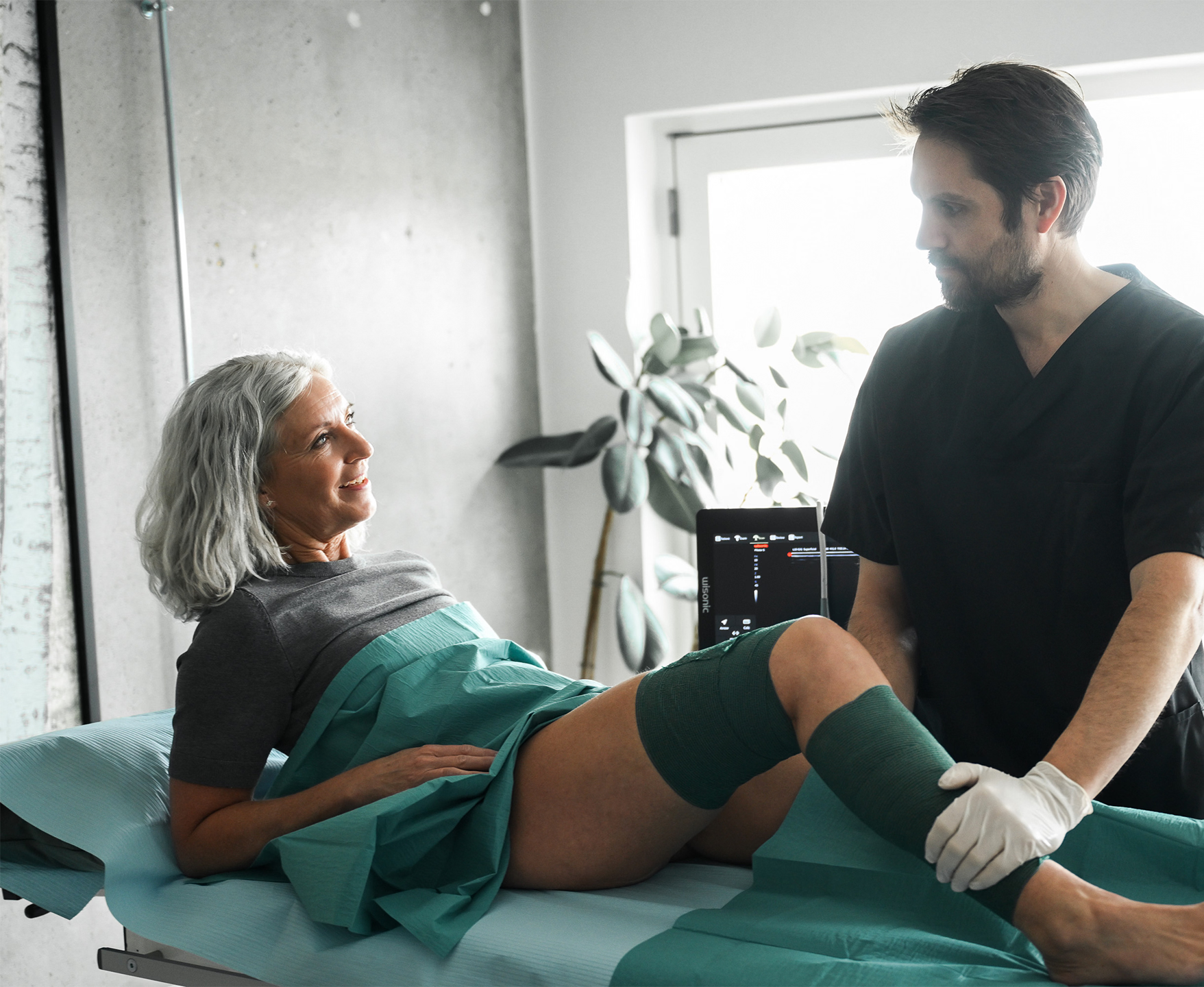
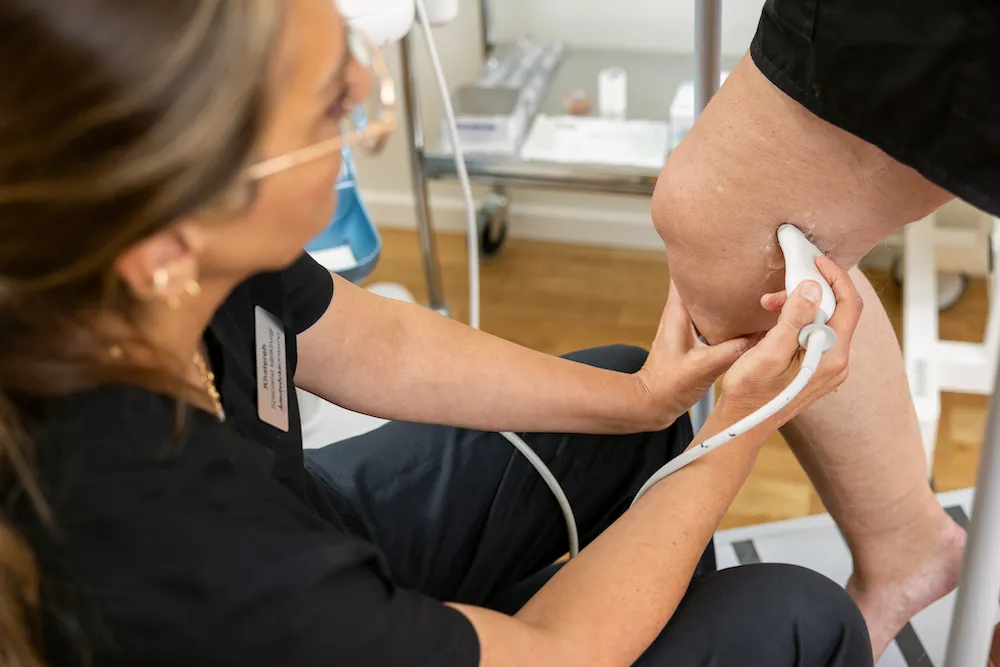
Foam sclerotherapy involves injecting a special medical foam into varicose veins under ultrasound guidance. The foam irritates the vein wall, causing it to seal shut. Over time, the vein is absorbed by the body and blood reroutes to healthier vessels.
It is often used for medium to large varicose veins and offers a non-surgical option with minimal disruption to daily life. Foam allows better contact with the vein walls than liquid sclerotherapy, making it more effective in treating larger or deeper veins.
See our main treatment page on foam sclerotherapy for a step-by-step breakdown of the procedure.
Foam sclerotherapy is often ideal for patients who:
It is particularly suitable for veins that are too twisted for a laser fibre to pass through, or for tributary veins left after EVLA. It can also be used as part of a combined approach.
At UK Vein Care, our vascular specialists carry out a detailed duplex scan at your initial consultation to determine whether foam sclerotherapy is appropriate. See our article on varicose veins stages to understand where you might fall on the CEAP scale.
Foam sclerotherapy is highly effective when used appropriately. It has been shown to:
Success rates are highest when the foam is used to treat veins with confirmed reflux. It is less suitable for very large veins with high flow or deep vein issues.
Effectiveness depends on:
Most patients see major improvement after one or two sessions, but it is not uncommon to need further treatment to address smaller residual veins.
See our guide to removing varicose veins for comparison with other methods.
Both foam sclerotherapy and endovenous laser treatment (EVLA) are safe and effective, but they have different ideal uses. Laser is often the gold standard for treating straight truncal veins, while foam is better suited for complex patterns or secondary veins.
Laser treatment may be advised if foam has failed previously or if reflux originates from very high-pressure veins. At UK Vein Care, we often use foam and laser in combination, depending on the vein map.
We explain this further in our article on the disadvantages of removing varicose veins.
Most patients find the recovery from foam sclerotherapy easy. Here's a general timeline:
First 24 hours:
Days 2–10:
Weeks 3–6:
At UK Vein Care, every patient receives a customised aftercare plan, access to a nurse helpline, and a follow-up ultrasound at 6 weeks.
In many cases, yes. Foam sclerotherapy often requires a staged approach. Even if the main vein responds well, additional sessions may be needed to treat smaller branches or residual veins.
Patients with advanced disease or recurrent varicose veins may also need maintenance every few years. Foam is also helpful after other procedures, such as laser, to tidy up remaining tributaries.
This depends on several factors:
If you only have early-stage varicose veins, one session may be sufficient.
Foam sclerotherapy is not usually funded by the NHS unless you meet strict clinical criteria. Even then, waiting lists can be months long, and many C2/C3 cases are declined.
At UK Vein Care, you can book directly without a referral. We offer consultations and treatment at our private clinics across the UK, with transparent pricing.
Many private health insurers cover foam sclerotherapy when medically indicated (i.e., for symptomatic veins). Pre-authorisation is often needed. Insurers we work with include Bupa, AXA, Saga, WPA, Vitality, and others.
See our page on varicose veins consultation to learn how to get started.
At UK Vein Care, we bring decades of combined experience in treating varicose veins using the latest evidence-based techniques. Our vascular consultants are experts in duplex ultrasound diagnostics and perform thousands of procedures every year.
You’re not just receiving a treatment—you’re getting a tailored care plan. If foam isn’t the most effective solution, we’ll explain why and offer alternatives like laser or microphlebectomy. Our goal is long-term relief, not short-term fixes.
We also offer:
This article is based on research and publications from reputable sources to provide you with the most reliable information. Here are some of the main sources used:
British Journal of Surgery – Myers et al. – Foam sclerotherapy outcomes
https://academic.oup.com/bjs/article/95/9/1146/6311981By using these sources, you can be sure that the article is based on current and scientifically reviewed information.

Become varicose vein free: We offer full treatment at a fixed and transparent price regardless of the treatment method. With us, there are no hidden fees.
Learn more about our prices


Take our quick self-test to find out if you qualify for varicose vein treatment.




.webp)